




Defining Goodwill
You may hear the word “goodwill” thrown around a lot, but what does it really mean? When it comes to selling a business, the term refers to all the effort that the seller put into a business over the year. Goodwill can be thought of as the difference between the various tangible assets that a business has and the overall purchase price.
The M&A Dictionary defines goodwill in the following way, “An intangible fixed asset that is carried as an asset on the balance sheet, such as a recognizable company or product name or strong reputation. When one company pays more than the net book value for another, the former is typically paying for goodwill. Goodwill is often viewed as an approximation of the value of a company’s brand names, reputation, or long-term relationships that cannot otherwise be represented financially.”
Goodwill vs. Going-Concern
Now, it is important not to confuse goodwill value with “going-concern value,” as the two are definitely not the same. Going-concern value is typically defined by experts, as the fact that the business will continue to operate in a manner that is consistent with its intended purpose as opposed to failing or being liquidated. For most business owners, goodwill is seen as good service, products and reputation, all of which, of course, matters greatly.
Below is a list of some of the items that can be listed under the term “goodwill.” As you will notice, the list is surprisingly diverse.
42 Examples of Goodwill Items
- Phantom Assets
- Local Economy
- Industry Ratios
- Custom-Built Factory
- Management
- Loyal Customer Base
- Supplier List
- Reputation
- Delivery Systems
- Location
- Experienced Design Staff
- Growing Industry
- Recession Resistant Industry
- Low Employee Turnover
- Skilled Employees
- Trade Secrets
- Licenses
- Mailing List
- Royalty Agreements
- Tooling
- Technologically Advanced Equipment
- Advertising Campaigns
- Advertising Materials
- Backlog
- Computer Databases
- Computer Designs
- Contracts
- Copyrights
- Credit Files
- Distributorships
- Engineering Drawings
- Favorable Financing
- Franchises
- Government Programs
- Know-How
- Training Procedures
- Proprietary Designs
- Systems and Procedures
- Trademarks
- Employee Manual
- Location
- Name Recognition
As you can tell, goodwill, as it pertains to a business, is not an easily defined term. It is also very important to keep in mind that what goodwill is and how it is represented on a company’s financial statements are two different things.
Here is an example: a company sells for $2 million dollars but has only $1 million in tangible assets. The balance of $1 million dollars was considered goodwill and goodwill can be amortized by the acquirer over a 15-year period. All of this was especially impactful on public companies as an acquisition could negatively impact earnings which, in turn, negatively impacted stock price, so public companies were often reluctant to acquire firms in which goodwill was a large part of the purchase price. On the flip side of the coin, purchasers of non-public firms received a tax break due to amortization.
The Federal Accounting Standards Board (FASB) created new rules and standards pertaining to goodwill and those rules and standards were implemented on July 1, 2001. Upon the implementation of these rules and standards, goodwill may not have to be written off, unless the goodwill is carried at a value that is in excess of its real value. Now, the standards require companies to have intangible assets, which include goodwill, valued by an outside expert on an annual basis. These new rules work to define the difference between goodwill and other intangible assets as well as how they are to be treated in terms of accounting and tax reporting.
Before you buy a business or put a business up for sale, it is a good idea to talk to the professionals. The bottom line is that goodwill can still represent all the hard work a seller put into a business; however, that hard work must be accounted for differently than in years past and with more detail.
Copyright: Business Brokerage Press, Inc.
monkeybusinessimages/BigStock.com
Read More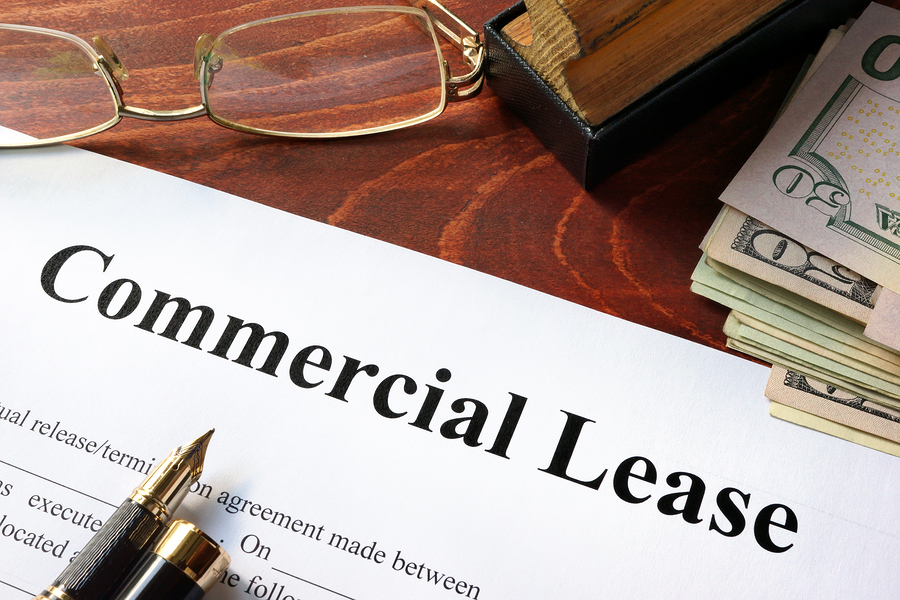
Gaining a Better Understanding of Leases
Leases can, and do, play a significant role in the buying or selling of businesses. It can be easy to overlook the topic of leases when focusing on the higher profile particulars of a business. However, leases are a common feature of many businesses and simply can’t be ignored.
Leases and Working with Your Attorney
Whenever a small business is sold, it is common that leases play a major role. In general, there are three different types of leasing arrangements. (If you have any questions about your lease, then you should consult with your attorney. Please note that the advice contained in this article shouldn’t be used as legal advice.)
Three Different Lease Options
In the next section, we will examine three of the most common types of leases. The sub-lease, new lease and assignment of lease all function in different ways. It is important to note that each of these three classes of leases can have differing complicating factors, which again underscores the value and importance of working with an attorney.
The Sub-Lease
The sub-lease, just as the name indicates, is a lease inside of a lease. Sellers are often permitted to sub-lease a property, which means that the seller serves as the landlord. It is key to note, however, that the initial landlord still has a binding agreement with the seller. Sub-leasing requires the permission of the initial landlord.
New Lease
If the previous lease on a property expires or is in need of significant change, a new lease is created. When creating a new lease, the buyer works directly with the landlord and terms are negotiated. It is customary to have an attorney draft the new lease.
Assignment of Lease
Assigning a lease is the most common type of lease used when selling a business. The assignment of a lease provides the buyer with use of the premises where the business currently exists; this works by having the seller “assign” all rights of the lease to the buyer. Once the assignment takes place, the business’s seller typically has no further rights. Also, it is common that the landlord will have wording in the contract that states the seller is still responsible for any part that the buyer doesn’t perform as expected.
Disclose All Lease Issues at the Beginning of the Sales Process
No one likes surprises. If there is a problem with your lease, then this is something that should be disclosed in the beginning of the sales process. Not having a stable place to locate your business can be a major problem and one that should usually be addressed before a business is placed for sale. Buyers don’t like instability and unknowns. Not having a firm location is definitely an issue that must be resolved.
Buyers want to see that you have made their transition from buyer to owner/operator as easy as possible. Providing clarity of issues, such as leasing, will help you attract a buyer and keep a buyer. Regardless of whether it is dealing with leasing issues or other key issues involved in buying or selling a business, working with a business broker can help you streamline the process and achieve optimal results.
Copyright: Business Brokerage Press, Inc.
Read More
What Should Be in Your Partnership Agreement
Partnership agreements are essential business documents, the importance of which is difficult to overstate. No matter whether your business partner is essentially a stranger or a lifelong friend, it is prudent to have a written partnership agreement.
A good partnership agreement clearly outlines all rights and responsibilities and serves as an essential tool for dealing with fights, disagreements and unforeseen problems. With the right documentation, you can identify and eliminate a wide range of potential headaches and problems before your business even starts.
Determining the Share of Profits, Regular Draw, Contributing Cash and More
Partnership agreements will also outline the share of profits that each partner takes. Other important issues that a partnership agreement should address is determining whether or not each partner gets a regular draw. Invest considerable time to the part of the partnership agreement that outlines how money is to be distributed, as this is an area where a lot of conflict occurs.
The issue of who is contributing cash and services in order to get the business operational should also be addressed in the partnership agreement. Likewise, the percentage that each partner receives should be clearly indicated.
Partnership Agreements Outline and Prevent Potential Problem Areas
Another area of frequent problems is in the realm of who makes business decisions. Here are just a few of the types of questions that must be answered:
- Are business decisions made by a unanimous vote or a majority vote?
- What must take place in order to consider new partners?
- Who will be handling managerial work?
- How will the business continue and what changes will occur in the event of a death?
- At what stage would you have to go to court if a conflict cannot be resolved within the framework of your partnership agreement?
You might just want to get your business running as soon as possible, but not addressing these issues in the beginning could spell disaster down the road.
The Uniform Partnership Act
One option to consider, which is offered in all states except Louisiana, is the Uniform Partnership Act or UPA. The UPA covers all the legal regulations that specifically apply to partnerships.
Reduce Conflict Via a Partnership Agreement
Forming a partnership can be great way to launch a new business, but it is also important to keep in mind that no matter how exciting the process may be it is still a business. New businesses face an array of challenges, and the last thing any new business needs is internal disruption. Mapping out via a partnership agreement the duties and expectations of all partners is an easy and logical way to reduce internal conflict within the business so that you can stay focused on building the business and making money!
Copyright: Business Brokerage Press, Inc.
Read More
Can I Buy a Business With No Collateral
At first glance the idea of buying a business with no collateral may seem impossible, but in reality it can be done. Let’s examine your options. When it comes to achieving this goal, your greatest assets are an open mind and a commitment to hanging in there despite the odds.
The Small Business Association’s 7 (a) Program is Your Friend
One possible avenue for buying a business with zero collateral is to opt for the SBA’s 7 (a) program, which works to incentivize the bank to make a loan to a prospective buyer. Under this program, the SBA guarantees 75%. The buyer still has to put in 25%; however, this money doesn’t necessarily have to be his or her money. This is where things really get interesting. The cash that the buyer uses can come from investors or even be a gift from parents in the case of young buyers. These possibilities all fall within the SBA’s guidelines.
Look into Seller Financing, You Might Be Surprised
There is a second way to buy a business with no collateral, and that comes in the form of finding a seller who is willing to finance. Again, this might seem counter intuitive at first glance. But the facts are that a large percentage of sellers do agree to offer some level of financing. So in other words, seller financing is not unheard of and stands as a viable way for a prospective buyer to buy without collateral.
Combining Seller Financing and the SBA’s 7 (a) Program
Combining the SBA’s 7 (a) program with seller financing can prove to be a powerful combination. It is important to note, however, that if you do use the SBA’s 7 (a) program the seller cannot receive his or her repayment for two years.
Persistence Pays
Ultimately, you will likely need to be rather persistent when trying to find a bank. Rejection is likely. But if you are persistent, it is possible to make the SBA’s 7 (a) program work for you.
One key way to keep yourself motivated is to constantly remember that jumping through some hurdles is all part of the process since you’re trying to circumvent the traditional route of using collateral. But working relentlessly may be worth it because if you are successful, you have acquired a tangible asset without any collateral of your own. That is no small accomplishment.
Don’t be afraid to ask for advice from S.C.O.R.E., the Small Business Administration (SBA), or an experienced business broker. While it might sound very unlikely that you’ll be able to buy a business without collateral, plenty of people have successfully done so.
Copyright: Business Brokerage Press, Inc.
Read More
Should You Become a Business Owner?
While being a business owner may in the end not be for everyone, there is no denying the great rewards that come to business owners. So should you buy a business of your own? Let’s take a moment and outline the diverse benefits of owning a business and help you decide whether or not this path is right for you.
Do You Want More Control?
A key reason that so many business savvy people opt for owning a business is that it offers a high level of control. In particular, business owners are in control of their own destiny. If you have ever wished that you had more control over your life and decisions, then owning a business or franchise may be for you.
Owning a business allows you to chart your own course. You can hire employees to reduce your workload once the business is successful and, in the process, free up time to spend doing whatever you like. This is something that you can never hope to achieve working for someone else; after all, you can’t outsource a job.
Keep in mind that when you own a business or franchise, you never have to worry about being downsized or having your job outsourced. You also don’t have to worry about asking for a raise. No doubt business owners do have to contend with market forces and unexpected turns. But even considering those factors, business owners clearly enjoy a greater level of control over their destiny.
Are You Willing to Forgo Benefits?
As an employee, you’ll usually be able to count on a regular income and even allowances for sick days and vacation days. However, business owners lose money if they are sick or take a vacation. Plus, they won’t necessary have the steady salary that employees receive as they could see their income vary from one month to the next.
Do You Want to Grow Your Income?
Business owners have the potential to grow their income and take a range of proactive steps that lead to income growth. As an employee, your fate is far different. Employees usually exercise either minimal or no control over the course of a business and have no say in key decisions that impact its growth and stability. Being a business owner by contrast allows you to seize that control.
The amount of income made by business owners varies widely depending on everything from the industry to the region. But statistics show that the longer you own your business the more you’ll make. In fact, those who have owned their businesses for greater than 10 years tend to earn upwards of 6 figures per year.
One of the best ways to determine whether or not being a business owner is right for you is to work with a business broker. A broker understands everything that goes into owning a business and can help you determine whether or not you have the mindset to set out on the path towards business ownership.
Copyright: Business Brokerage Press, Inc.
Read More